“The caste system will end and all jobs will be talent based.”
“Even lords and generals?”
“Yes.”
“Will anyone be harmed by this?”
“Only the real leaches on society…”
In 2008 I played my first Western open-world RPG, and even though I enjoyed the moments I shared with my brother, bonding over role-playing in a medieval fantasy world, I couldn’t help but fantasize about playing in an eastern world where samurai patrolled the landscapes or you crept through the shadows as a ninja. I would complete my first sandbox game a few years later as a roaming cowboy looking for freedom in southwest America, and it would bring me back to the days of watching Clint Eastwood westerns or the movie Tombstone with my dad. Something about the myths surrounding figures in Japan and the American western frontier has always fascinated my young imagination since I was a kid, and this love for the lone frontiersman upholding his personal honor always resonated with me. Granted this video isn’t about traditional samurai, or westerns, or the two games I alluded to. This nostalgia gives context for my instant love of Gotoku Studio’s Yakuza spin-off, Like a Dragon: Ishin!
Like a Dragon: Ishin! does not stand out in a world where Ghost of Tsushima and God of War exists; its narrative is in Japanese and its graphics feel dated. However, there is something powerful and serene about roleplaying as an undercover mob ninja that just checks all the right boxes for me. Jank and weight of the character Sakamoto aside, this game has caused me to lose many hours after a long day teaching students. Instead of running around town observing the sights, I get lost in the old-school Japanese aesthetic of a post Edo Japan. Instead of cooking meals like an adult, I cut vegetables and make soup in a game. Instead of fishing I fish in a game. Instead of… Ok you get the picture. There are few games that capture the trivial day-to-day life of a volunteer civil servant like Ishin, even if the main plot revolves around a proto-Yakuza group on the brink of the Meiji Restoration. Something as simple as helping a child in town by giving him vegetables or fish, something that appears so trivial and mundane on the surface, gives this weird sense of purpose, like you are step-by-step growing, not only the trust of a town, but building a community one step at a time.

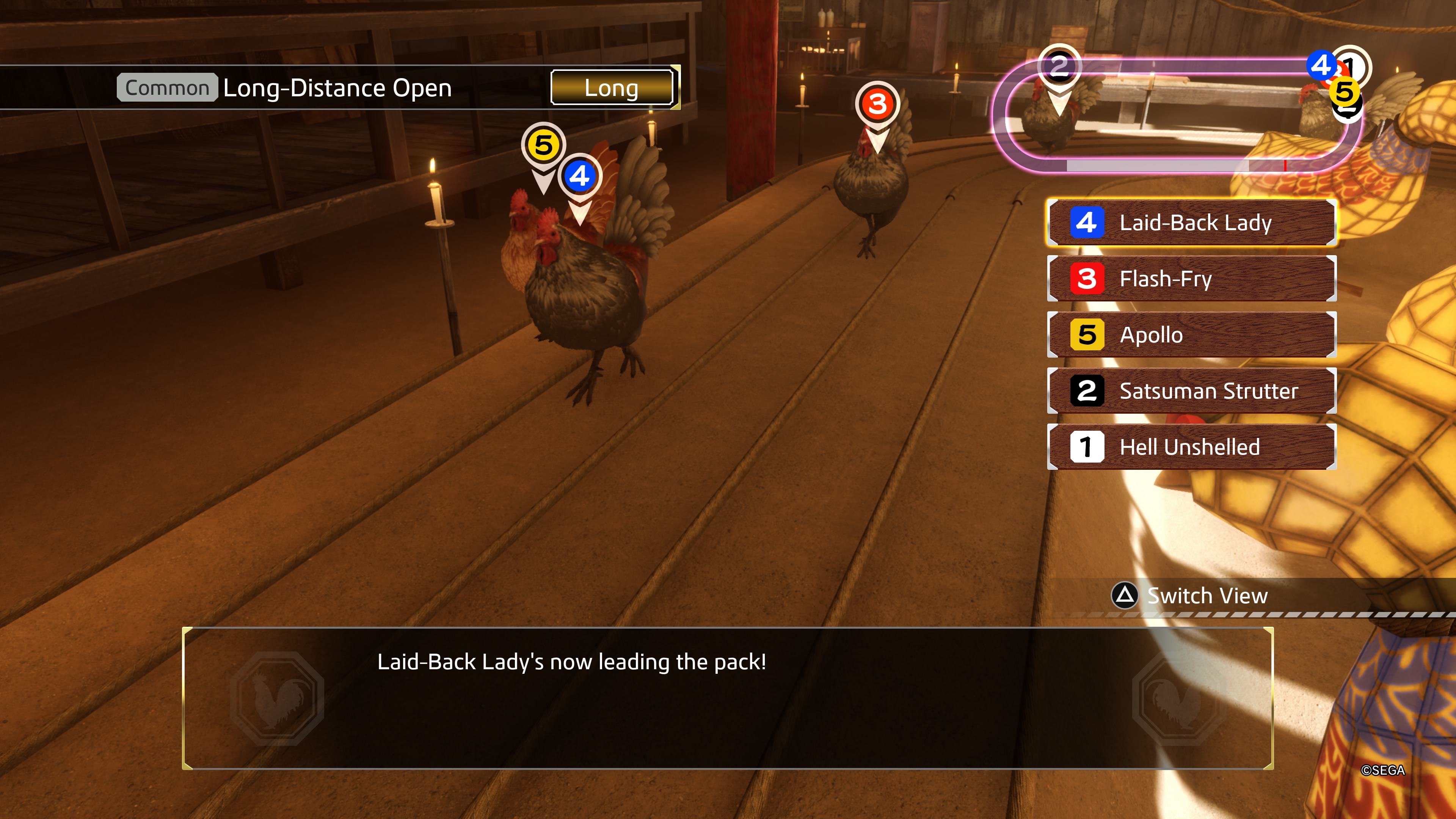
At your homestead you can play with your pets and tend a garden, and you have your own waifu that runs into town for supplies while you exercise your cooking expertise through timed button presses (and button mashes). Ferrymen carry you by boat or palanquin to your destination, and you may even choose to practice your fighting prowess in a dojo or assist distressed citizens being harassed by Kyoto’s most nefarious. Shrines dot the city’s landscape where you can pray to honor the gods or store supplies, and random baubles glimmer on the ground, some offering tickets for a pseudo gambling addiction. You can bet on chicken races and play card games, for example, simply to pass the time.
This small world is open for you to explore and dabble in all of Kyoto’s offerings, and the tone and immersion this game offers is really a wonder to behold. The graphical fidelity is by no means competitive; the controls are not intuitive, and the movement is not fluid, but the moment to moment gameplay creates scenarios that will live in your mind rent-free hours after you have stopped playing. Gotoku really captured the atmosphere of this fictionalized version of Kyoto, and despite all the randomness, there is a clear reason why this game was able to latch its hooks into me. It is fun, plain and simple.
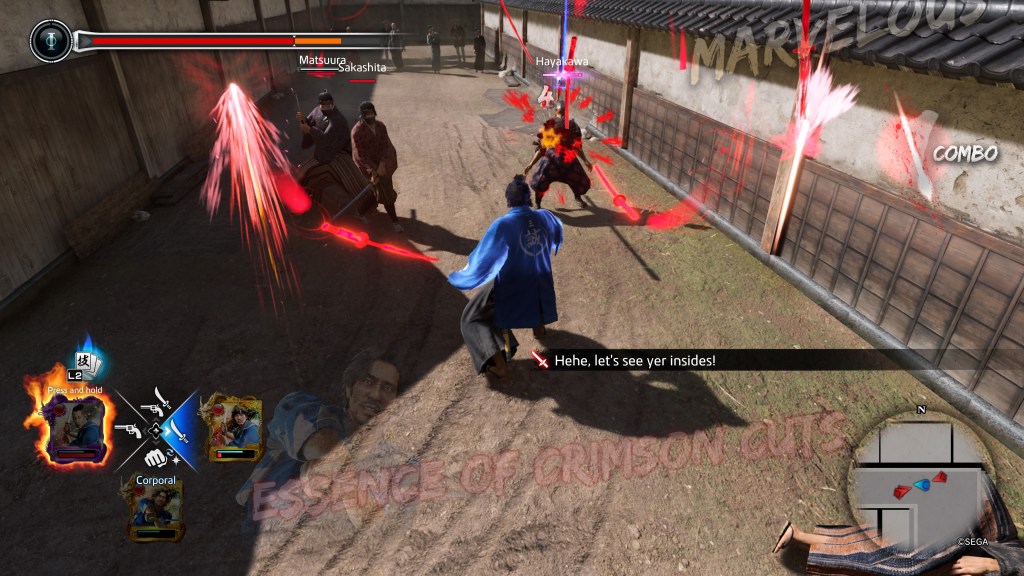
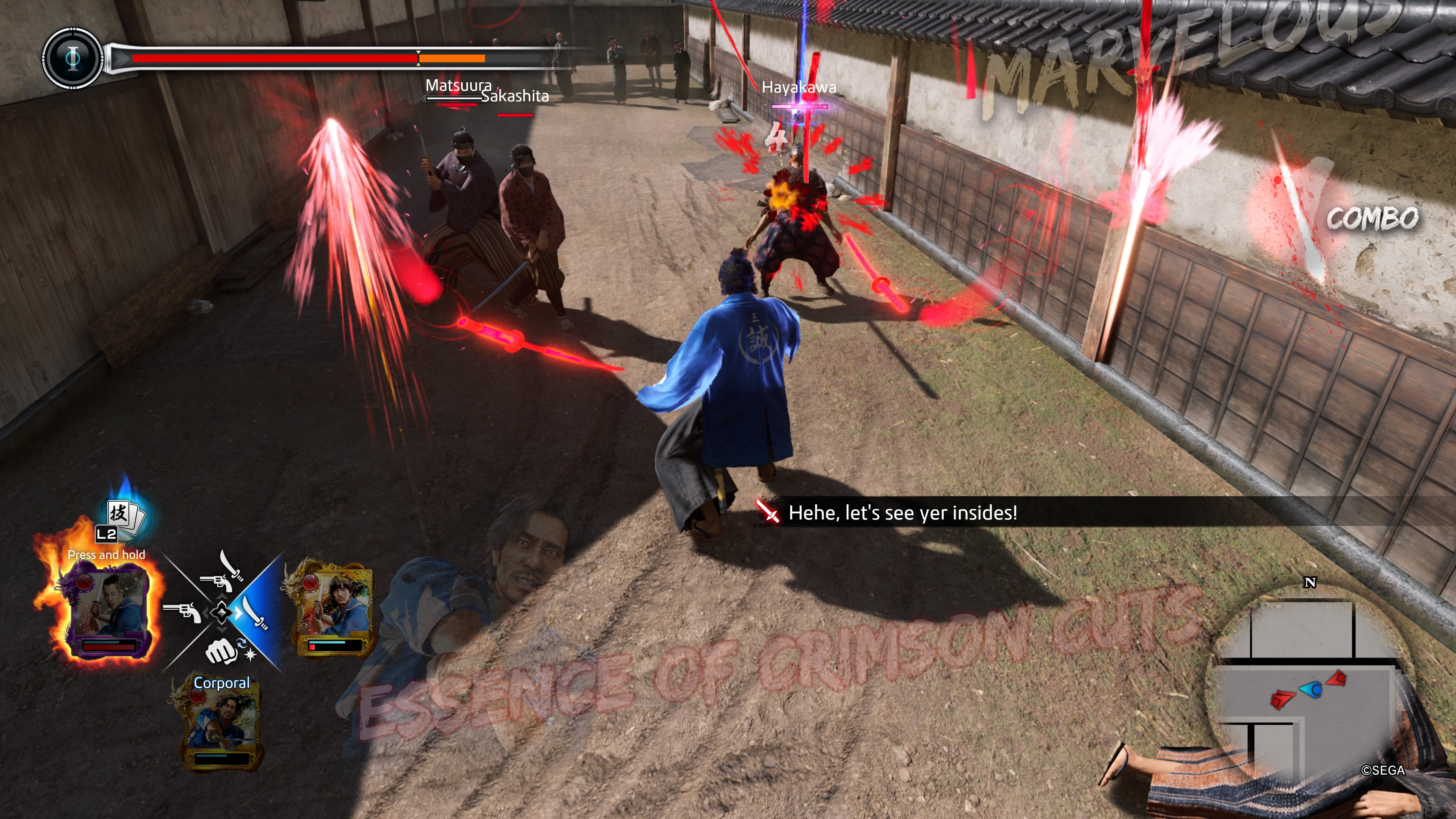
Which leads me to the meat of the game: the combat. Ryoma Sakamoto has four ability wheels, one for fisticuffs, one for the katana, one for the revolver, and one that dual wields both the aforementioned sword and gun. All of these wheels have upgrades and abilities that allow for flashy instakill moves that can disengage one or more opponents in a glorious bloodbath. These moves can be activated in multiple different scenarios, my favorite of which has Sakamoto dashing past a bullet to slash his opponent like a scene from an old samurai film. Once you unlock missions you can equip cards of companions that offer buffs and specific abilities that are on a cooldown like a MOBA. All of these techniques and styles create a gameplay loop fluid enough to both keep the player on their toes and also shoo away boredom. It is in these combat scenarios that the beat-em-up gameplay shows off Gotoku’s mastery of arcade-style combat, formatted perfectly to work in a 3D world. It is during these specific, hectic moments that I am having the most fun, and really feel like a samurai living an alternate life.
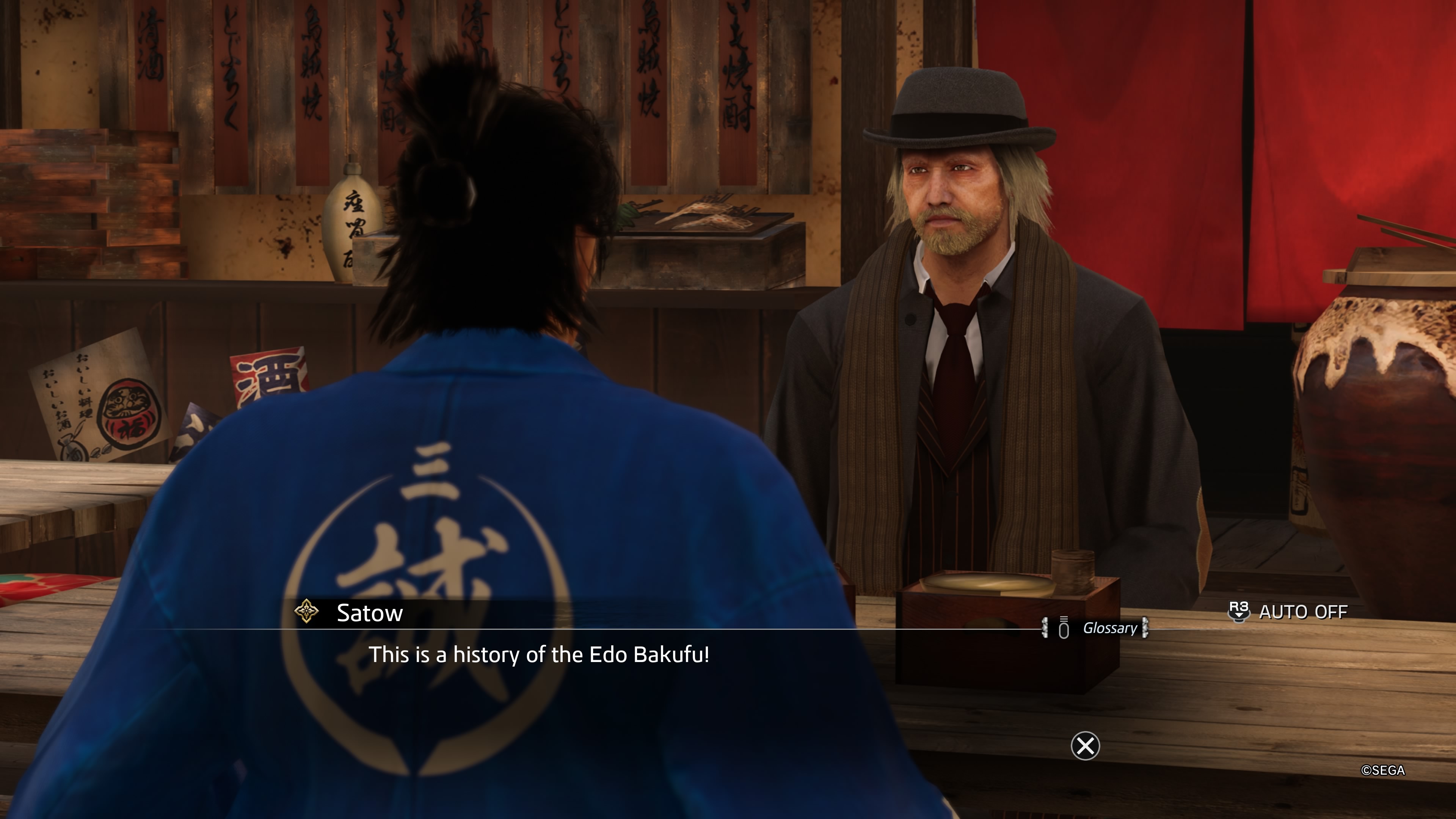
And after immersing yourself in this beautiful but bloody game, you are rewarded with a narrative that takes you on a journey of purposeful fulfillment and character progression. This is not the story of an epic quest, but a story of personal growth and learning how to be an adult, a leader, a citizen, and a civil servant. Its message is both corny and wholesome and seeing Sakamoto’s journey come to an end was a scene I put off for longer than I care to admit, simply because I didn’t want this game, didn’t want this journey, to ever end.
Having a gift for words and explanations does not, however, do this work of art justice, and I hope that in the end, you have the same privilege that I have been given, to play one of the most fun videogames I have ever played before you die.




 Vying For Time
Leave a comment