The Admiral said I was a “Devisive Figure” now. And he’s right. – Captain August, Issue 1
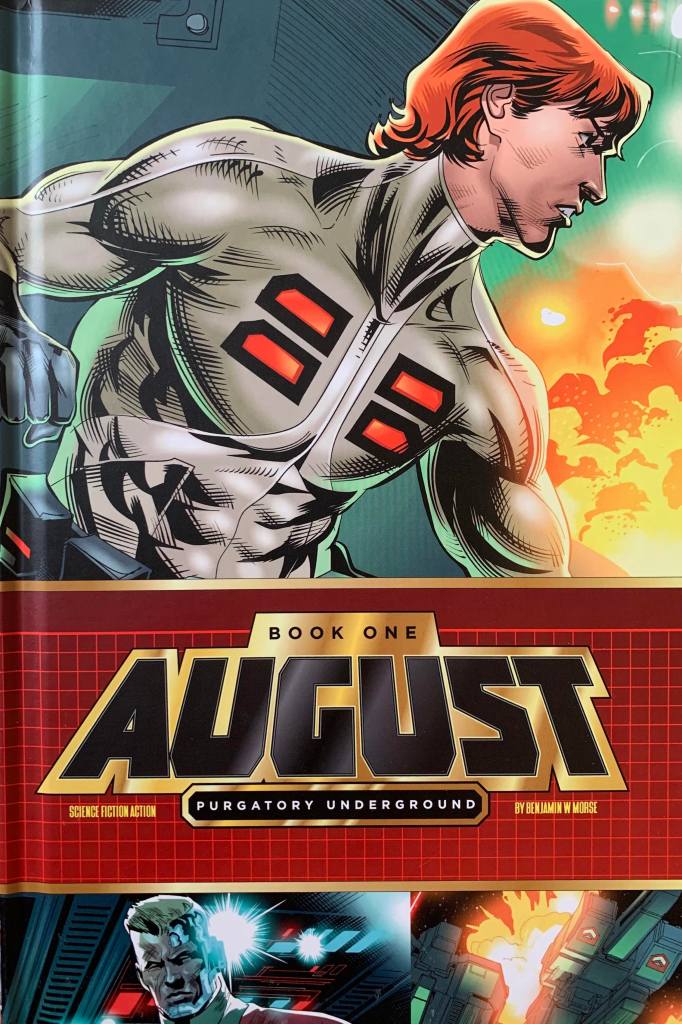
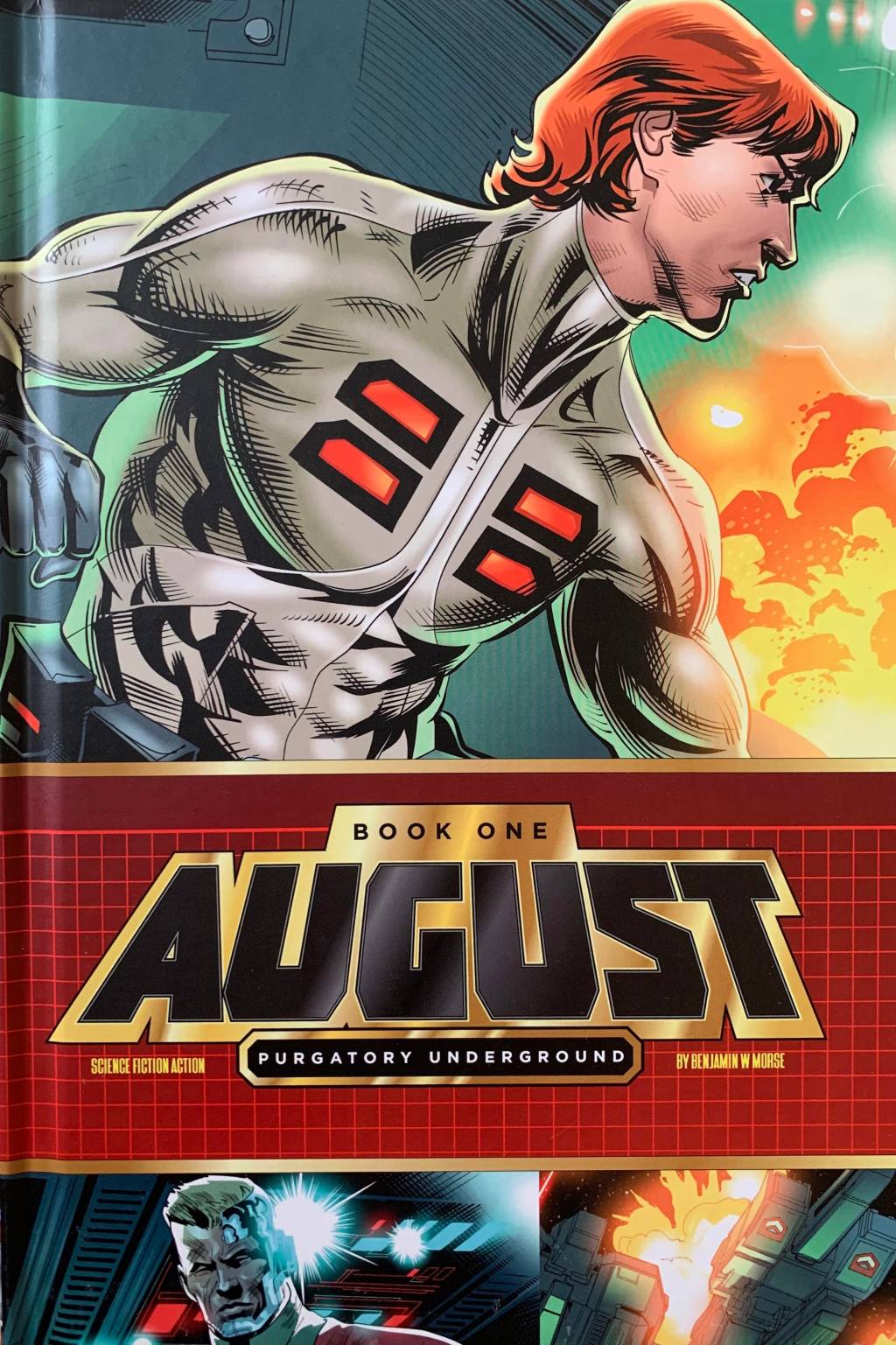
August: Purgatory Undergound by Benjamin Morse is a love-letter to science fiction media of the 80’s – full of Star Wars references, Saturday-morning cartoons, and a fair bit of Clint Eastwood. Morse is in a unique position with this series – he is the writer, artist, letterer, colorist, editor, advocate – this is his book. Therefore, there is a feeling of cohesiveness that is not usually found in comic book media. This is the book that Morse wanted to make, from beginning to end. For the sake of this spotlight, I will just be showcasing issue 1 to minimize spoilers and incentivize picking up the story for yourself. If you do not want any spoilers, here is my elevator pitch for this book – August: Purgatory Underground is a story of a war hero, who finds himself ostracized from the very people he saved, on a quest for purpose, redemption, and, utltimately, self-forgiveness. It tackles topics including returning home after war, changed and alone; feeling rudderless after completing long-term goals that were never intended to be completed; having motivations and beliefs challenged and questioned. August is for people who love comic books made by people who love comic books. You can tell Morse is enjoying himself on this book, which comes out in the gorgeous art and provocative story. This is part one of a planned four part series of books, but part one is complete and available for purchase.
One of the hardest parts of creating an independent comic that is succesful is creating a bond between the reader and the comic. Independent comics do not have the buy in and sentimental value that Spider-Man, Batman, or Superman have. They have to, in a single issue, introduce the main character, most of the supporting cast, setting the tone and location, introduce background information necessary for the story, and, most importantly, do all of that while still maintaining the reader’s attention. It is quite a tall order. Thankfully, I believe that August: Purgatory Underground (A:PU) does all of this very competantly and effectively. Morse starts the comic with a flashback – introducing us to Captain August and Captain Waverly of the Federation, who have infiltrated a Rebellion base on Mars. They are attempting to disarm an anti-spacecraft weapon defense system to allow the Federation to subdue the rebels, but are struggling to do so. August, in a bold move, changes the target of the weapon system and targets the rebellion base. This would prove a decisive move in the greater scheme of the rebellion, and we then jump forward one year, to the present time. Before moving on with the plot, I want to highlight how effective the art in this section is.
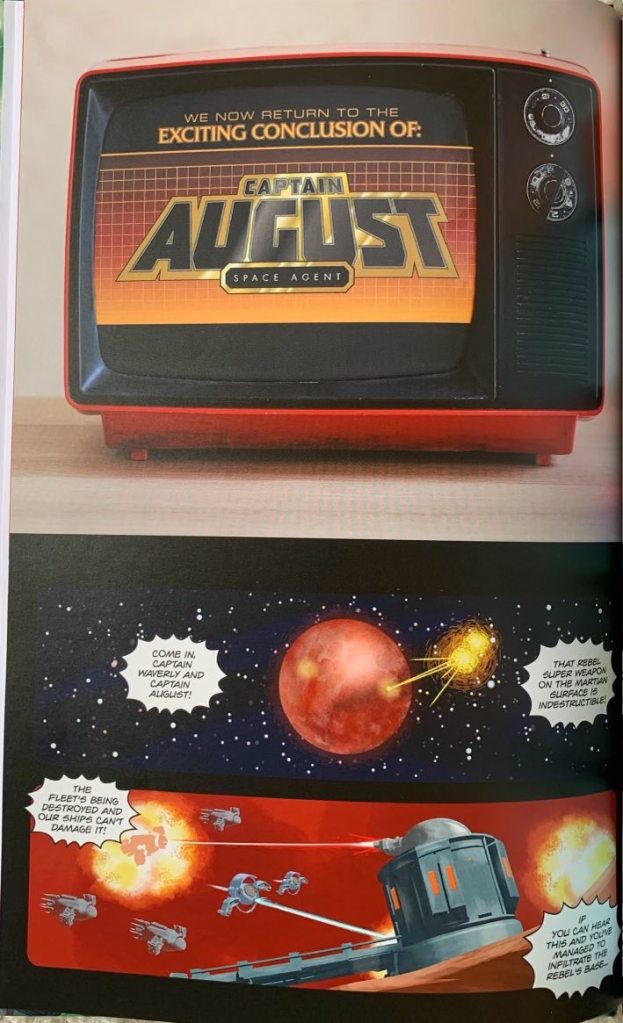
By starting the comic with the TV set reading “We now return to the exciting conclusion of: Captain August: Space Agent”, Morse effectively sets the tone (80’s sci-fi cartoons), tells us where we are at the in greater scheme of the August story (the conclusion of the prequel), and allows himself to showcase this different type of art that evokes classic cartoons. This art is only found in this short opening section, but is such a good fit. Revisiting the comment earlier on tone, I believe that the tone of this section is also a deliberate choice from Morse to harkon back to cartoons. The language and appearance of Waverly and August in this section are in stark contrast to how they are depicted later on, they appear youthful with their long hair and simple facial expressions. We will see later how these two characters have changed post-time jump.
The story then jumps forward in time, and we see a rather haggard Captain August on Mars, fueling up his spaceship preparing to leave. The attention to detail and environmental storytelling are on display in this first splashpage – a sign showing the planet is deemed unsafe (heavily implied to be from the weapons August turned on the planet in the opening), a large group of refugees being huddled off planet, with one watching August with contempt, and the officer’s lounge being plainly visible, which will be the setting for the bulk of this next section. August then goes into the lounge looking for Waverly, and is treated very coldly by his fellow officers. They are celebrating the end of the rebellion and Christmas Day, but appear put off by the appearance of August. Waverly and August have a discussion about “what happens next”, the inevitable conversation I can only assume all soldiers and officers have after the end of a war is declared. While Waverly is being transitioned into the reconstruction effort, August has been deemed “persona non grata” and being removed from his unit. This scene is heartbreaking, and the parallels to “Rambo” and the way the American soldiers post Vietnam were recieved when they returned home, is surely intentional. August then reveals that he has requested to be put back into active service, feeling that there is no future for him outside of the war. With a reluctance to leave his past partner, but a desire for it to be on his time and terms, August leaves the lounge and returns to his ship. Remember the refugee watching August earlier? While August was inside the lounge, someone has grafitti’d his ship, writing “Remember Mars” and “Murderer”. “Remember Mars” has quite a different effect for August – while the refugees and ex-rebellion members shout “Remember Mars” as a rallying cry to fight against their perceieved oppressors in the wake of a planetary collapse, August “Remember(s) Mars” as the place where he lost his purpose, and, even though he was protecting those he cared about and completing the mission, became a pariah. He cannot forget Mars and his actions in ending the war will follow him the rest of his life.
Following the coordinates to the San Vertado System given to him by the Federation, August attempts to contact Federation command and give them an update. The communictaion systems are, for some reason, not responding and appear to be caused by something within the system intsellf. When he exits hyperspace into the remaining fleet of the Rebellion, all becomes clear. In an incredibly badass moment, August narrates that “I brace myself for a wave of fear … that never arrives.” We have seen in the prologue that August has no qualms with making split-second decisions to save his life, and this is no different. He does not attempt to flee, but heads straight for the other fighter craft with weapons engaged. Inevitably, his spacecraft is damaged and careening towards the planet’s surface. We are then introduced to Sheriff Cossato, who used to be the law in the nearby town. Cossato is shown standing over the wreckage of a rebellion patrol, gun in hand, showing that he is not taking the occupation without a fight. Morse has Cossato find out about the space battle and August’s crash landing through a short-wave radio, which is used to create their meeting in a more organic way. August, emerging from the wreckage of his spaceship on a strange planet is understandably alarmed when Cossato shows up offering his help. His decision is forced, however, when more rebels show up shooting. Morse then transitions into an action scene reminiscent of Indiana Jones. This is our first display of August’s combat prowess, first with hiting a moving target from a moving target, a feat that even Cossato is impressed by. He then jumps from their vehicle to the pursuing vehicle and begins a fist-fight. Morse shows proficient knowledge of hand-to-hand fighting, and has stated that some of the fist-fights later in the book were inspired by scenes in “Rocky”. The comic up to this point has been frontloaded with exposition and set dressing, and this chase scene is quite rewarding. The scene ends with a last-second jump from August from the rebellion vehicle before it drives off a cliff, leaving August and Cossato to head back to town.
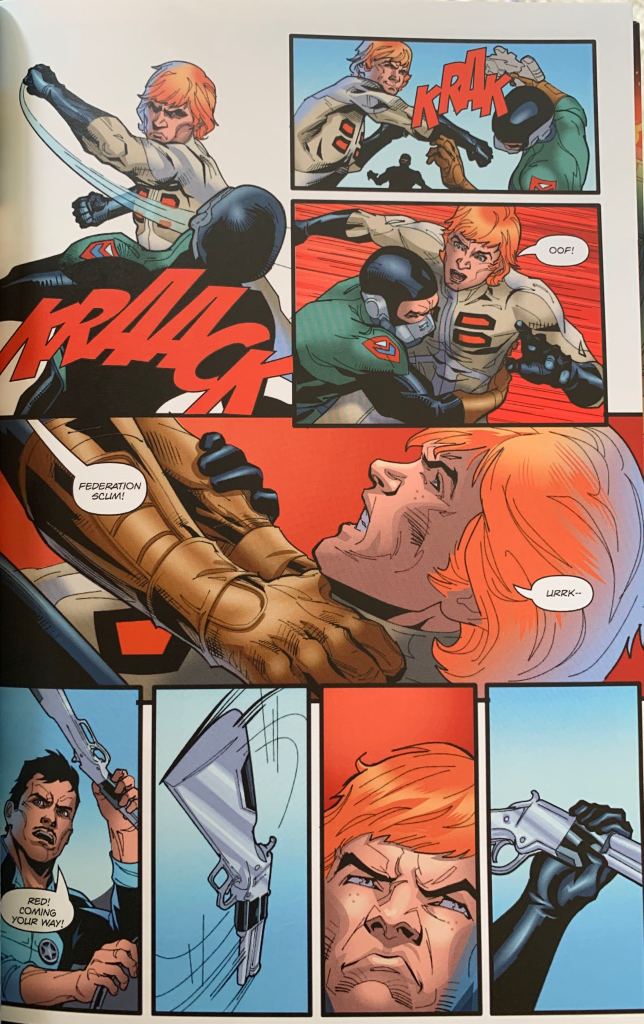
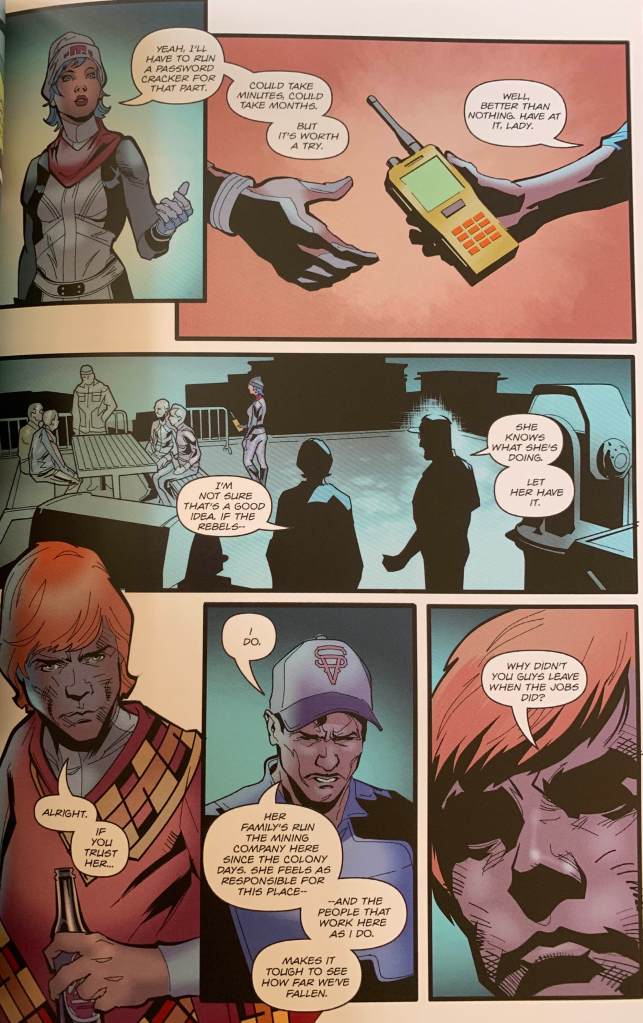
Arriving at the nearby town, Cossato hands August a pancho to use as a crude disguise, ala “Man with No Name”. Morse often changes the attire or appearance of his main characters as a way of showing progression through their quest and differentiating story beats. August is taken to the safehouse where we are greated with the rest of the team and short biopics on each. The rest of the team have unique appearances, distinct hair styles and different colored clothes, allowing them to be easily distinguishable. After the introductions, everyone heads on to the roof to celebrate Christmas, and August hesitantly joins them. This scene parallels the Christmas celebrations at the beginning of the issue where August is ostracized from his comrades and not wanted at the festivities, but this time August is the one creating the barrier. Morse also revisits August’s attempts at contacting Federation command, this time with Travino’s help. He lets her attempt to crack the code, and begins to let down his walls and become part of the team. The issue ends with Cossato lamenting the state of their home, and August proposing a plan to fight back against the Rebellion occupation.
Thus ends the first issue of August: Purgatory Underground. I hope that through my genuine enthusiasm for the book and that of the creator, Benjamin Morse, you are intrigued enough to pick up this book. The individual issues are (as of May 28th) still available on Red 5’s online web store. Benjamin Morse is active on YouTube under the channel “Benjamin Morse, Comic Book Artist” where he interviews other independent comic book creators and highlights comic book creators that were influential to his career. He is actively working on further comic books, using Kickstarter and Zoop to see these projects through, with his next being released sometime this year.



 Vying For Time
Leave a comment