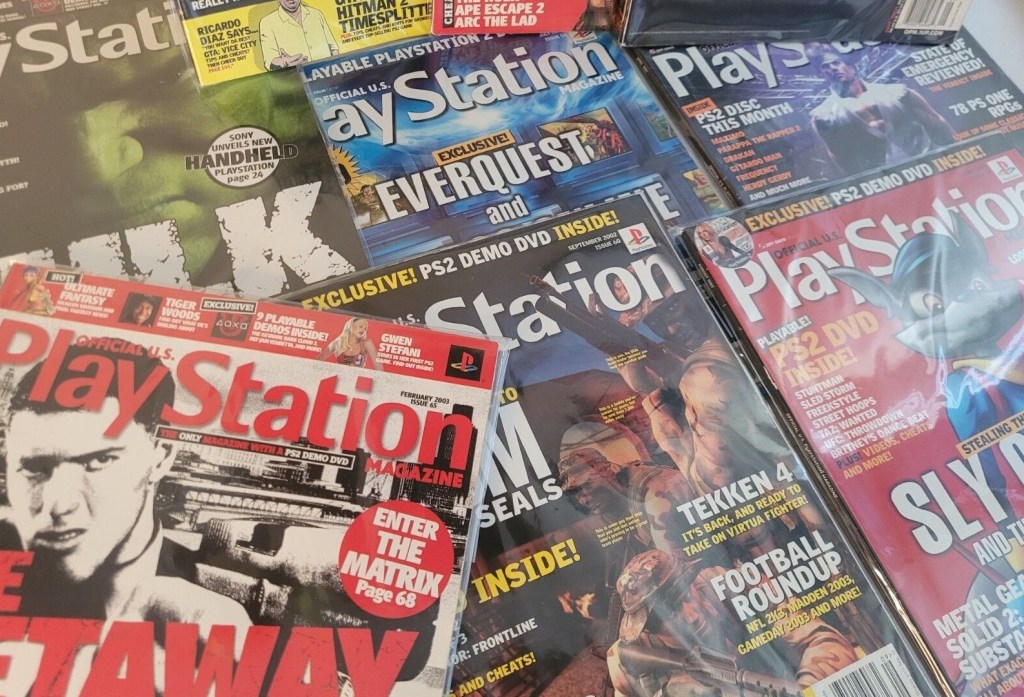
When I was in grade school, every summer my brother and I would go to Blockbuster and rent a video game for the week to play in between playing outside or with friends. We would take turns trying a level or just watch the other person play for a few hours. We almost always finished the game at least once in that time.
As video games get more and more mainstream, and accepted as a form of legitimate entertainment, it seems like the justification for video games have also changed. In the late 90’s and early 00’s, video games existed in two main camps – video games that told a story and were art (think, Final Fantasy 10, metal gear solid 3, etc) and video games that existed to capitalize on a marginalized section of the gaming market (think sports games or licensed media games). While I enjoyed quite a few licensed video games during my childhood, the lord of the rings games for PlayStation 2 and the Toy Story games being standouts, I will be the first to admit that they very rarely pushed the envelope and did something new. Almost all of the innovation at the time came in the form of story-driven, linear experiences, like Halo: Combat Evolved, the original Bioshock, Jak and Daxter, Super Mario Sunshine, etc. In general, video games were designed to take about 10-20 hours to complete, and maybe an additional 10 to collect all the collectibles. There were even games that incentivized multiple playthroughs, like the skulls in Halo 3, the different guns and outfits in Resident Evil 4, or the camouflage and hidden weapons in Metal Gear Solid 3. And while there were standout open world experiences like The Elder Scrolls Oblivion and Morrowind, the vast majority of games were still either level based or had a small hub world with a level selection. That is, until 2011 when three games would completely change the RPG landscape – The Elder Scrolls V: Skyrim, Dark Souls, and the Witcher 2. And Minecraft. We cannot forget about Minecraft. (Yes, holy crap, they all came out at the same time.)
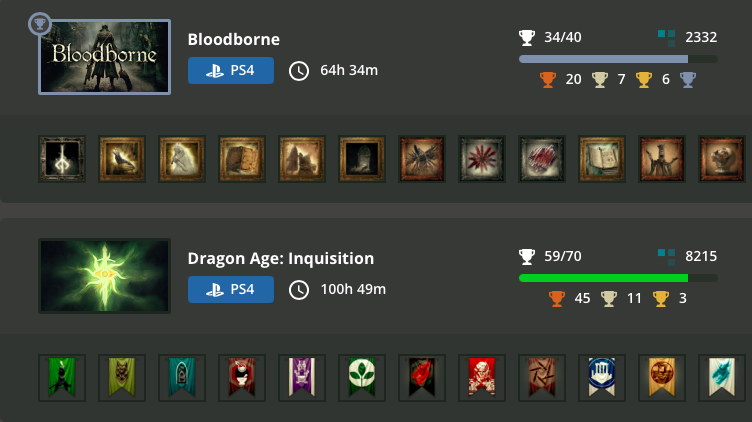


I still remember, very vividly, the midnight release for Skyrim. My brother drove me out to the mall in Louisville, we waited in line, just for the GameStop to inform us they were not doing midnight release for Skyrim, only Call of Duty Modern Warfare 3. We then got back in the car and rushed over to another GameStop to wait in line again and finally get the game. Brandon had not, at this time, played an open world game aside from Oblivion (and he tried to make a character with facial hair and ended up making him blue from the nose down) and wasn’t super interested in Skyrim, but I made a character (cannot remember the race but it was either an imperial, Nord, or Breton) and then played for 5 hours straight. Anecdotes aside, I cannot understate the importance that Skyrim had on my development and interests. However, I would have never guessed the impact Skyrim would have on video game development as a whole. Suddenly, all games were open world – dragon age was open world with inquisition, the Witcher 3 was open world, and soon so was the legend of Zelda. And this brings me to the meat and potatoes of my whole point – why does this matter? Why does it matter if video games get bigger and bigger and everything turns into a 100 hour experience? Because, in my honest opinion, video games are unable to be as impactful, have the same consistency and polish, and innovate in the same way that they used to.
[This Next Section Includes Spoilers For Assassins Creed 2 and Assassins Creed Origins]
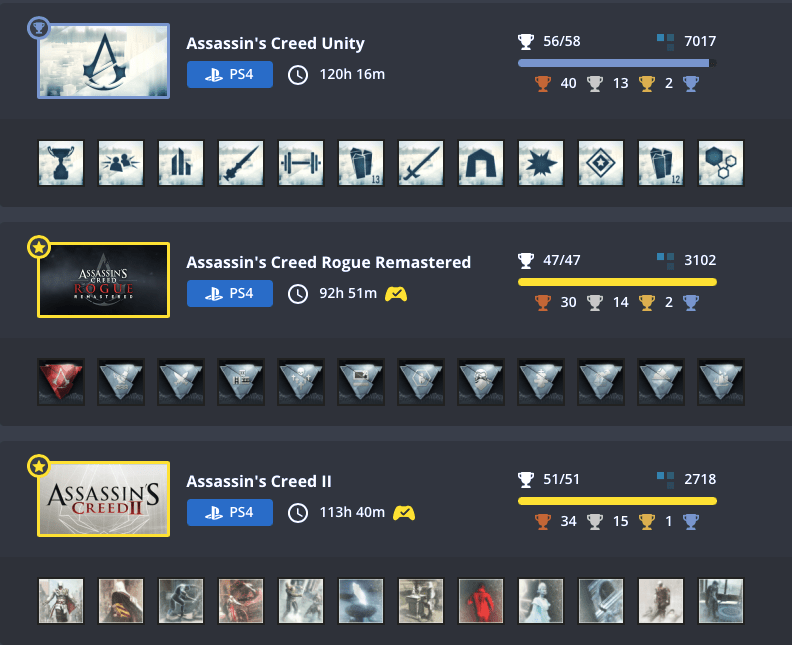
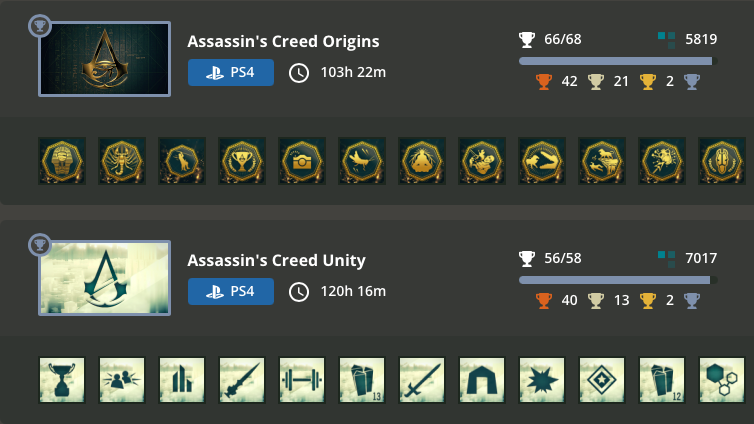
Let’s start with my first point – impact. To best illustrate this, I’m going to compare Assassins Creed 2 (2009) and Assassins Creed Origins (2017). Both games have similar protagonist motivations (Ezio hunting down the murderers of his family, Bayek avenging the death of his son), similar mission structure and gameplay loop (trailing missions, sneaking assassination missions, exploring the area and finding hidden collectibles and crafting ingredients), and a varied world with different locations (Venice and Florence, Alexandria and Memphis). The difference, however, is in the length – AC2 is roughly 15-20 hours long, while AC:Origins took me 50 hours the first time, and over 70 the second. In that 20 hours, we go through 20 years of Ezio’s life, from his teenage years as a romantic and shit-starter, to this early adulthood searching for his family’s murderers, to his middle adulthood as he heads to Rome. We see him rash and angry, distraught and helpless, calm and collected, cold and calculating. He meets several love interests, meets Da Vinci, and even goes to carnival with a wrist mounted gun. In comparison, AC origins takes place over the course of 5 years, Bayek already has sound motivations and beliefs that are never questioned or conflicted (minus his relationship with Aya), and due to the open-ended nature of the gameplay, very few standout set pieces. I am by no means suggesting that video game developers need to re attempt to catch lightning in a bottle, and ultimately it I want to play a game like AC2 again I can just go play AC2, but I want to point out how much was sacrificed for the sake of the game being open world. That feeling when Ezio air assassinates the Pope is unmatched. The shear /Impact/ that was possible with deliberate pacing and thought out justification for gameplay systems.
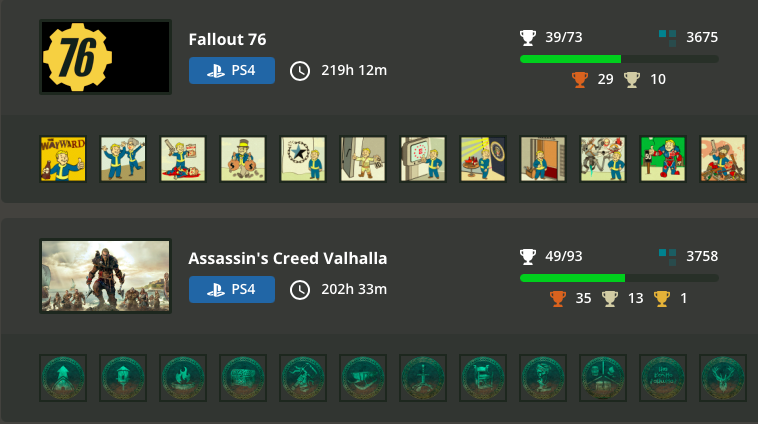
The second point, consistency and polish, is possibly the worst consequence of video game bloat. The best case study on this one is Fallout 76 (2018) and Fallout 4 (2015) versus Fallout 3 (2008). But Fallout 3 is an open world game Ben! You might be screaming at your screen, but I encourage you to replay Fallout 3, just doing the main quest, and see just how much of the game you experience. All Bethesda games have bugs, and this isn’t really commenting on bugs and stability, this is moreso talking about the minute by minute gameplay and experience. In Fallout 3, the main game systems are rather basic – loot weapons, armor, and ammo, don’t go over your carrying capacity, and explore the capital wasteland. Each town or settlement has a quest, and most ‘dungeons’ have loot worth your time. You can use VATS and stealth to augment your gunplay, and fast travel to locations after you’ve discovered them. All of these systems work well. They complement each other and have a good reason to exist – weapons and armor degrade (Annoying!), but can be repaired in the field with duplicate items (Less annoying!). There are areas that will irradiate you causing you to lose maximum health (annoying!) but you can find RadAway in most medical lockers that will get you back to normal (Less annoying!). Almost every minute of gameplay is active. Compare this to FO76 and FO4, which added ‘survival mode’ (Yes, this was technically added with Fallout New Vegas), creating a ripple effect for the gameplay loop. Now, you can create a settlement in which you can have storage and workbenches (super cool!) but requires you to loot anything and everything for materials (not cool!). You’re now spending a significant amount of time in menus and fast traveling back and forth between your settlement and dungeons. This is a gameplay system implemented for the sole purpose of padding out the game. Full stop. Couple this with the change to power armor, creating a false sense of scarcity with damaged pieces and fusion cores, and you have a game where you spend more time acting like a survival game and less time actual exploring and doing quests. This is the issue with bigger games – the consistency in minute to minute gameplay is all over the place – systems are put in to artificially extend your game time making you spend more and more time doing things that used to be simple.
Lastly is the lack of innovation in this post open world landscape. And to illustrate this point, I’m going to use Breath of the wild and literally any other Zelda game. And this take is harsh. Zelda has been a game series that has existed on having a single knockout feature (time travel in Ocarina of Time, the time limit in Majora’s Mask, changing size in Minish Cap, the boat in Windwaker) and taking that feature and running with it. Pushing the idea to the very limits creating interesting puzzles and boss battles, items and environments in which that feature can shine. But with Breathe of the Wild they created a game in which the standout feature is – being an open world. Nintendo spent untold number of hours and development resources into turning the Legend of Zelda into an open world tech demo. It is a proof of concept. It was not until Tears of the Kingdom that this proof of concept would see a standout feature in the form of the machines, and even this felt like an expansion. It used to be that the pillars of game design were story, graphics and sound design, and gameplay. And within gameplay, you had to differentiate yourself from the myriad of other games coming out – what made your game special? Now, it is not so much what makes your game special, and moreso what can you do better than the other games in your genre – every game is an open world survival crafting RPG exploration game with a glider. And breath of the wild is no different, except it’s Zelda.
I cannot imagine what it must be like to be a child who comes home from school and can only play a few hours of video games a week and wants to try to make legitimate progress in a game like Assassin’s Creed Valhalla or level up the battle pass in Fortnite. These games are designed and created to be unbeatable. Never letting loose their grip, making you come back day in and day out for the hope that you spend more and more money to feel some sense of accomplishment and that your time was well spent. I have over 200 hours in Valhalla, and have spent so many late nights trying for a ‘W’ in Fortnite, but nothing will ever be as memorable as taking down the Shagohod for the first time in Metal Gear Solid 3, or running from the Dahaka in Prince of Persia Warrior Within. And the best part? When Mom said we could only play video games for 30 minutes and then had to head outside, we could actually complete a level or two.
If you’ve made it this far in this opinion piece I thank you for your time, and hope that, even if you don’t necessarily agree with my points, we can have a discussion and lament on the state of video games. I love every game mentioned in the article, and do not think any of them are a waste of time, in fact, every one but Breath of The Wild I have put nearly 100 hours in. I’m on my umpteenth playthrough of Skyrim, and debate weekly about redownloading AC Valhalla and platinum’ing it. But I do miss my 10-15 hour romps that demanded your attention and refused to let go.


 Vying For Time
Leave a comment