It all began when I was just a kid bouncing on my father’s knee. You see, we come from a long line of master thieves who kept all their secrets of sneaking and stealing in an ancient book – The Thievius Raccoonus! – Opening cutscene, Sly Cooper

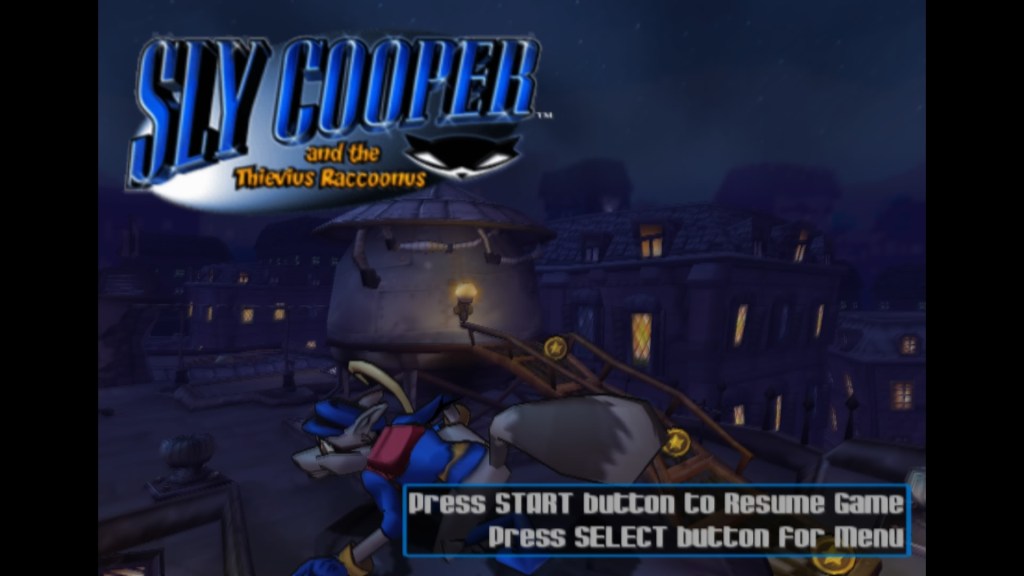
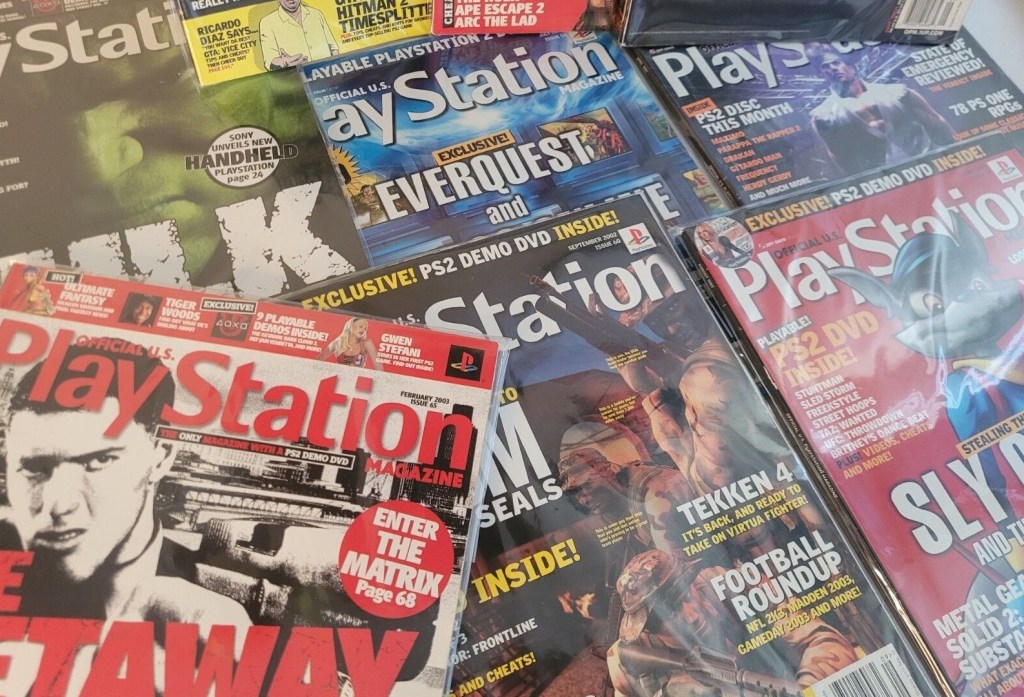
I woke up in the middle of the night, lights off except for the Christmas lights on the tree in the living room. I quietly got out of bed, and snuck down the hallway to the tree. There were so many presents under the tree, Dad loved Christmas and he and Mom always made sure there were plenty of gifts for us to open (Though I still believed in Santa at the time). I checked to see which side of the tree were my presents – the left – and sifted through them to find the one. I found the distinct PS2 box, wrapped up tight with a ribbon and bow. Carefully, I broke the wrapping paper in the upper corner just enough to see the cover. It was Sly Cooper, the game that I wanted the most and the one I asked for above all other things that Christmas. Barely able to hold my excitement, I put the game back where it was and went back to my bedroom. I don’t think I went back to sleep that night. I cannot underplay how much the Sly Cooper series meant to me as a child. I loved those games so much, the characters, the locations, the unique mechanics, the humor and character designs. But, when it came time to choose between the Xbox360 and the PS3, I chose the 360. I left Sly Cooper behind in 2008 in favor of Call of Duty and Halo. However, last year in 2024, Sly Cooper 1 got a remaster for PS4, and I knew I had to pick it up. Here’s my experience with Sly Cooper and the Thievius Raccoonus over 20 years later. Let’s revisit Nostalgia.
Going into the remaster, I remembered certain ‘truths’ about the game or impressions certain parts had on me as a kid – I remember struggling with the Mugshot boss fight, I remember hating the Madam Voodoo boss fight, I remember hating the entire final area with clockwerk and all the minigames, and I also remember how much I loved the levels where you were running from Carmalita Fox. I thought Sly was super cool and funny, I remember feeling like Bentley and Murray were cool but otherwise forgettable, and I remember thinking the skeletal water dragon level was terrifying. I also remember the bottles being hard to find and the upgrades not being super useful. All in all, as a kid, I enjoyed replaying the levels I liked and looking for the bottles, but not really following the story or liking the bosses (after all, I was 6 or 7 when I first played it!). I also felt like Sly 1 was the weakest of the 3 original games, and much preferred the open-world feeling of the next two. I’ll be addressing these as I go through the game and assessing to see if my opinions have changed as I’ve gotten older and played more video games. Without further adieu, let’s see how Sly Cooper holds up 20 years later!
Sly Cooper and The Thievius Raccoonus starts with a beautifully animated cel-shaded cutscene setting the tone for the game – it is rendered in roughly the same style as the in-game graphics and introduces us to the characters of Sly Cooper and Bentley the Turtle. Cutscenes play out in a Metal Gear Solid esque communicator sequence with binoculars showing important land markers or interactables within the level. Bentley serves as the ‘eyes in the sky’ type character, giving Sly information on who they are hunting, information about the general level layout and obstacles, and any relevant information on game mechanics or abilities. He is the in-universe fill in for a video game manual. In Sly 1, Sly is presented as young and suave, but ultimately on a quest for vengeance and he can be rash. Bentley however is quite anxious and nervous about the whole heist (and really doesn’t get any better in this game). One of the best game design aspects of Sly Cooper is the implementation of the blue sparkles that indicate interactables. These are given an in-universe explanation that is not necessary, but appreciated. The sparkles represent Sly’s thief senses and are used at regular intervals throughout the game to do all kinds of abilities, ranging from sneaking on ledges, to nimbly landing on small spikes, to skating and sliding down pipes. At the end of the tutorial area we are introduced to one of the mechanics I mentioned earlier loving as a kid – the Carmelita Fox missions. Carmelita is a police officer and will banter with Sly throughout the level while shooting with her electric gun. These levels are not quite on rails but add a nice sense of urgency to the level and truly test your platforming abilities. Tutorial done, and we are treated to another beautiful cutscene, this time a more still drawing used to catch the player up to spend on the story so far. Sly comes from a long line of thieves who all developed their own unique styles of committing burglary. These abilities they chronicled in a family heirloom called the ‘Thievius Raccoonus’ which is meant to be passed from generation to generation. The cycle, however, was broken when the ‘Fiendish Five’, a group of thugs and gangsters, ambushed Sly’s father at their house, killing him and stealing pages from the book. This left Sly to be sent to the orphanage where he would meet his two best friends Bentley and Murray – Murray’s role in the group is explained here. Murray is a Hippo and he quit adept at driving and carrying heaving objects. He is the muscle of the group but also the getaway driver. With the backstory explained, and the introductions made, we head to the first real area of the game – The Isles of Wrath, Wales. I will not be going beat by beat through the game (afterall, I believe everyone should play this game and get the chance to experience it for themselves), but I will be making comparisons and observations between my opinions when I was younger and now.
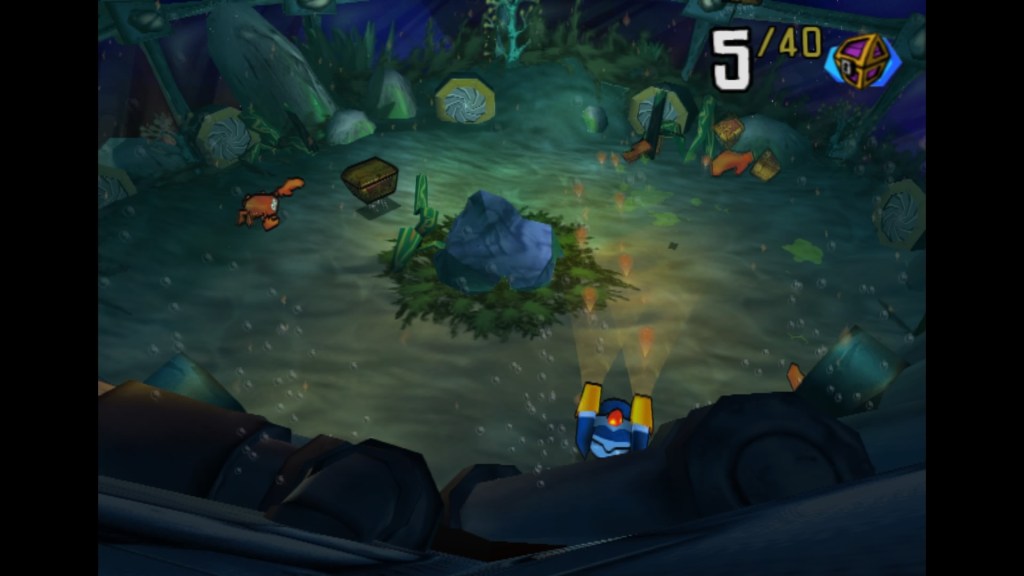
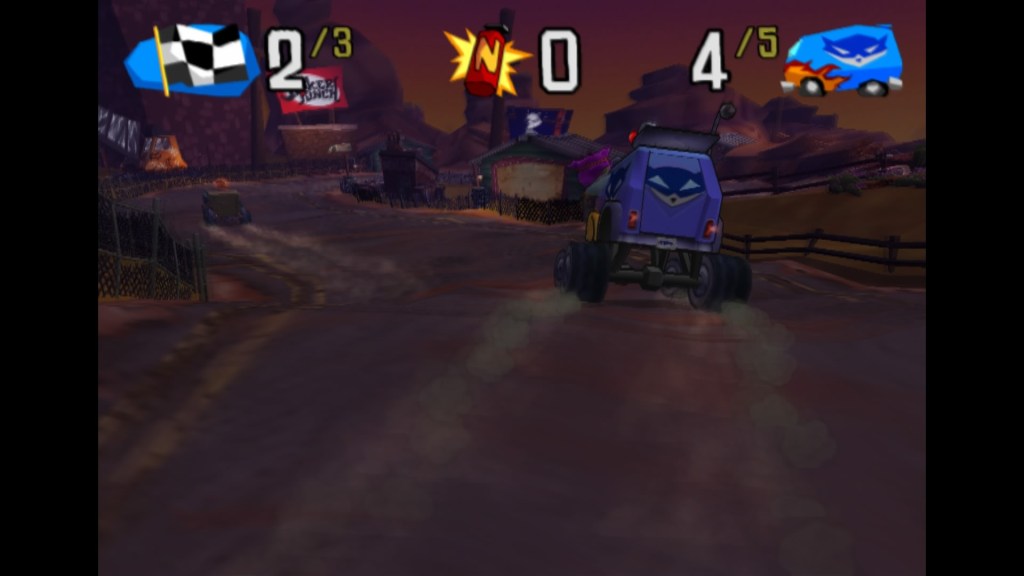
The first difference I noticed between child me and current me, is that “Treasure in the Depths”, the minigame in “Tides of Terror” where you play as a submarine shooting away crabs, is much easier than I remember it. This level used to drive me crazy. I attempted to beat it dozens of times and could never consistently kill those crabs. This would continue to be a theme throughout the play through – whether it was the on-the-rails missions where you had to protect Murray, or the missions where you drive a skiff with a mounted turret, the minigames were not nearly as rough as I remember. That being said, the races as Murray are still incredibly frustrating and unfair – they revolve around having everything go almost perfect each lap, which gets progressively less realistic as the level goes on. There are speed boosts on the map, as well as consumables that give you a controlled speed boost, but the enemy rubber-banding is almost as bad as in Mario Kart, with no offensive maneuvers available to swing the pendulum in your favor. In regards to the Clockwerk level, which is basically all minigames, it was fine. Not overly difficult, but also not super rewarding and different from the other levels. I feel it was anticlimatic compared to the rest of the worlds, but it makes up for that in the phenomenal final boss fight.
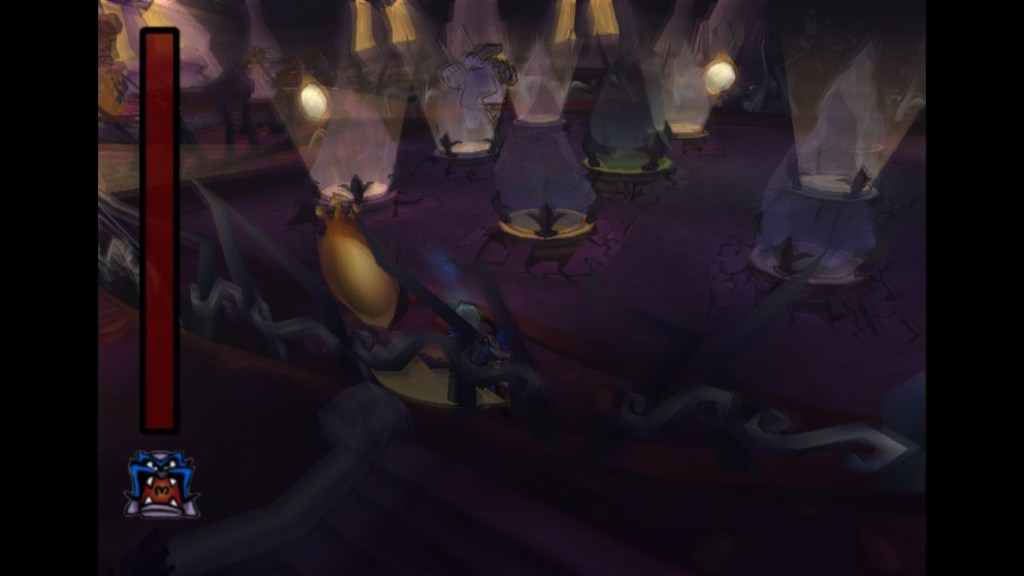
I hated boss fights in video games when I was younger – from Spyro the Dragon, to Crash Bandicoot, and Sly Cooper was no exception. I hated each and every one of them – probably because it required a modicum of strategy and I didn’t have time for that. Sly 1 has five bosses, each with unique mechanics not seen in any other levels, and, contrary to little Ben, they are actually really well designed. Each boss fight focuses on a single mechanic, with increasing level of difficulty. The Sir Raleigh fight in “Tides of Terror” involves precise platforming – jumping from platform to platform, then adding jumping over his tongue. It serves as a roadblock to test how well you are understanding the mechanics and the platforming at this point in the game – because in the next area, it’s about to get harder. In similar fashion, the Mugshot boss fight in “Sunset Snake-Eyes” starts with a game of ring-around-the-rosey where you have to hit mirrors back at Mugshot, burning him and breaking his guns. You do this three times, with the final time being a time-trial on a chandelier involving incredibly precise spire jumps. The only boss fight that is lackluster is the one against the Panda King, which basically devolves into a beat-em-up with little strategy. Even so, the visuals in this fight and the references to 70’s Kung-Fu movies is quite well done. In summary, the boss fights in Sly 1 are very dynamic and unique, and break away from the typical platforming bosses that are just big versions on regular enemies, while keeping the same tropes of the genre like the “3 hits to kill”.

The last takeaway I had from this retrospective replay revolves around how game pacing and introduction of mechanics have changed in the last 20 years. I will most likely talk about this more in depth in a future “A Critical Hit on Game Design” article, but I have to highlight just how well paced this game is. Every few levels there is a new mechanic either introduced or refined, or a new enemy type, or a new ability you unlock from the bottles. The modern game design philosophy revolves around the idea of introducing the player to a cool mechanic or world, and just letting them play around and find things out organically. While this does lead to some fun moments of discovery, especially in games like Legend of Zelda: Breath of the Wild, I miss when games would show you a mechanic and build a single level around that idea. There is a level in the second world in Utah, where the key that you need is in glass case on the top of a skyscraper. You are shown in the beginning of the level that there is a crane above the glass with a large wrecking ball attached, and you spend the entire level working your way up to the top of the crane just to drop the wrecking ball on the glass. This mechanic is never used again, and makes this level standout. It was a single cool idea, that would lead to level design that accentuated that idea, and a mechanic that saw the idea to fruition. The glass bottles in each level reward the player with new abilities that, frankly, are not very consistently useful. However, that creates fun gameplay opportunities by the player to use those abilities, and since they are optional, they are not built in to the level design. You can get a diving attack move in one of the early levels that allows Sly’s attack range to be much longer than normal – while this is not a required move, if you get good with using it and know the effective range, it makes some enemies much easier to kill. And, because you get new abilities almost every level, there is a real sense of progression from one world to the next. This contrasts well with modern game design where you get new abilities to coincide with new chapters of the game and each is required for progression.
When the credits rolled, and I got that platinum trophy, I felt the same feeling I felt almost 20 years ago – satisfaction. I knew Sly’s story wasn’t done there, even way back then, just like I know the Sly 2 remaster is also available. Sly Cooper is a wonderful platformer, with gorgeous theming and phenomenal level design. The characters stand out and the whole game feels a giant homage to crime thrillers and classic platformers. I cannot recommend this game enough, and I believe everyone, no matter what age, will find enjoyment in this remaster.
With modern video games getting bigger and bigger (with no end in sight), more companies are opting to produce remasters and remakes during the development of new videogames to offset the cost. Sly Cooper as a franchise is most certainly dead (Sly 4 came out in 2013), but with the remastered versions I hope that more people are able to play and enjoy these original 3 games. The other hope, and this one is much less likely, is that these games influence future video game design. I already discussed how the sailing mechanics in Sly 3 (I believe) influenced the sailing in Ubisoft games, but I think these is still so much potential and character in these old games that can have a positive impact on modern games. Clair Obscure: Expedition 33 is a prime example of how classic game mechanics can be reshaped and reused to create a new feeling video game, and I hope this is a trend that continues.

 Vying For Time
Leave a comment