I had gazed upon the fortifications and impediments that seemed to keep human beings from entering the citadel of nature, and rashly and ignorantly I had repined. – Victor Frankenstein, Frankenstein Chapter 2
[This article contains spoilers for Frankenstein by Mary Shelley, as well as plot summaries for Rime of the Ancient Mariner by Samuel Taylor Coleridge, Paradise Lost by John Milton, and the story of Prometheus from Greek mythology]
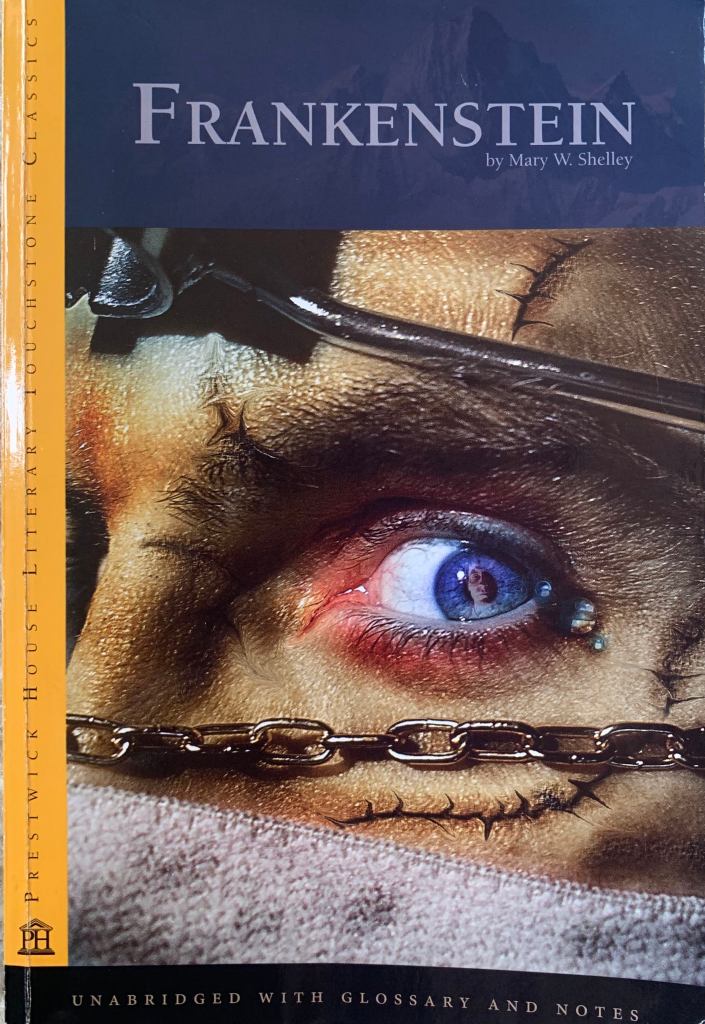
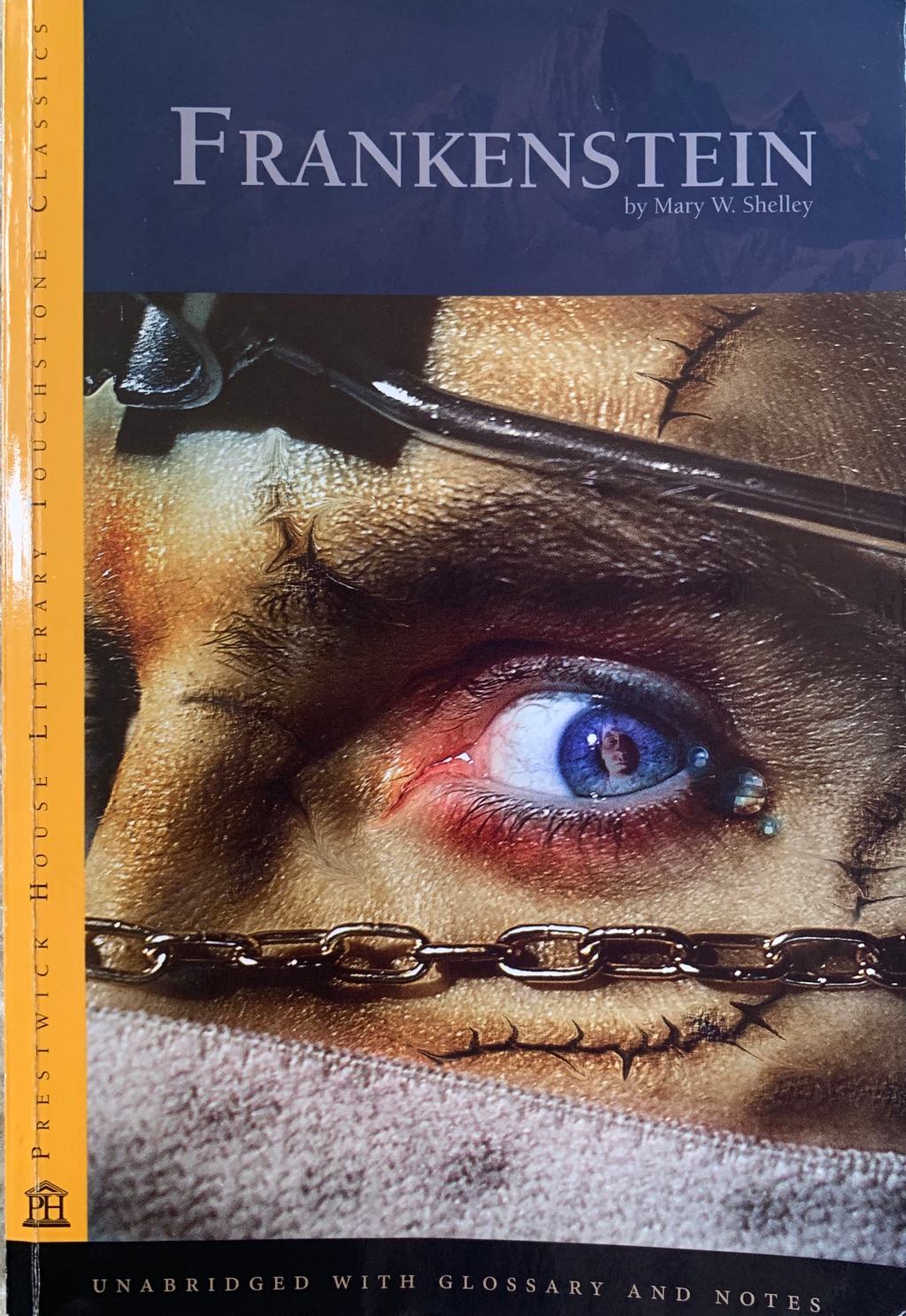
Frankenstein by Mary Shelley is an incredibly simple novel in premise – the titular character of Frankenstein uses alchemy and magic to create life, but, upon seeing his creation, is abhorred and flees in terror. The creature (or monster), having been spurned by its creator, pledges revenge against Frankenstein. Why then, over 200 years later, is this novel still being discussed and part of pop culture? I fell in love with this book when we were assigned to read it in high school, and so much of the techniques Shelley utilizes have subconsciously snuck into my own writing style and preference. Shelley is able to take a simple horror story and, through her exceptional use of language and literary expertise, paint a beautiful picture for the senses and captivate our emotions. I would like to explore and analyse how Shelley’s use of romantic and gothic tropes blend perfectly into a beautifully grotesque expression of the human condition, as well as her utilization of biblical and greek mythological references have created a new mythology centered around her own story.
One of the defining characteristics of Frankenstein is Shelley’s use of weather and nature as a stand in for character’s inner struggles and emotion. Victor [Frankenstein] is shown to be at ease and comfortable, happy even in some parts, when the weather is calm, sunny, and the view of the mountains and lakes are seen. Contrary to this, are the moments where Victor feels despair – torrential rain showers, thunderstorms, and blinding blizzards, or being on endless, winding paths through dark woods. The two movements of gothic literature and romanticism are normally portrayed as opposites, or at least in opposition of one another – romanticism is the love of nature and feeling that God’s presence can be felt and seen just by the world around us, while gothic literature can best be described as haunting and oppressive, the idea that nature can hide premonitions of the future and doom. Instead of feeling at odds with each other, Shelley is able to use both a reverance of and admonition of nature as two sides to the same coin. In fact, the theme of duality is consistent throughout the whole work. Most things in the story come in pairs, with good and bad warring with each other for center stage. Mysticism and the occult are at war with science and progress. Nature and the natural order are at war with human knowledge and discovery. Shelley is a master at interweaving two disparate concepts into a single cohesive theme and narrative throughout the novel.
Taking a step back from the themes and literary execution of the novel, I would like to discuss the framing of the work in general and how Shelley is able to present the novel in a unique way. The narrative framing for Frankenstein involves a two-part narrator and a series of journal entries. The story begins from the viewpoint of Robert Walton, a scientist who is onbourd a ship headed for the north pole. He is writing a series of journals and letters to his sister back in England, assuring her of his impending success and straightforward journey. While I hesitate to refer to this as starting “in medias res“, we are given very little information regarding the impetus of the journey other than Walton saying “you cannot contest the inestimable benefit which I shall confer on all mankind, to the last generation, by discovering a passage near the pole to those countries [north of Russia, towards the north pole].” However, very cleverly, Shelley introduces us to the notion of sibling love, and a brother journeying far from home on a personal quest, leaving a sister behind to lament his goings. After a few journal entries, Walton runs into the titular character of Victor Frankenstein, and it is his story, being told back to Walton, being recited then back to his sister in England, to which the remainder of the novel comprises. This is where the two-part narration comes into play – Victor is finally able to tell the truth and the whole story to someone (being Walton), and this allows the story to be told without a bias or a questionable narrator like would be present in another story. The tale that Victor presents is not dissimilar to the same quest being undertaken by Walton – Victor left his home in search for the knowledge of life, leaving his “cousin” Elizabeth to send him letters to inquire about his findings, but, Victor is much further on his quest. He has since found the knowledge of life and used it to create a new being. However, this was not a success, and instead has haunted his every waking hour since, leaving him a wretch and a pariah. This causes Walton to reconsider his own quest, and eventually call off the search and return home. Of note is that this plot arrangement is very similar to “Rime of the Ancient Mariner” by Samuel Taylor Coleridge, which Shelley acknowledges as an influence in the original linear notes.
I mentioned beforehand how Shelley was able to borrow from both Greek mythology and Christian mythology to create a new mythology; which in doing so, has prevaded pop culture and cemented itself firmly in the culttural zeitgeist. In particular, Frankenstein is (a self proclaimed) modern retelling of the Greek story of Prometheus, combined with the christian mythology epic Paradise Lost by John Milton. In the story of Prometheus, Prometheus creates humans from clay and steels fire from the olympian gods to grant them the power of technology. Prometheus is then tortured by the gods for all eternity for his deeds, having his internal organs eaten by an eagle forever. Paradise Lost has a similar story, with Lucifer being firstmost of all angels, but in his hubris, he attacks God and tries to overthrow heaven. Lucifer is beaten by “God’s right hand”, and thrown down from heaven alongside his revolutionaries and condemned to hell, or tartarus (the Greek mythology rough equivalent). In Frankenstein, Shelley borrows the idea of creating life from clay and granting it fire, with Victor creating the monster and granting it life and the ability to think. Victor’s dismissal of the creation and rejection of it’s free will is not unlike God’s reaction to Lucifer in Paradise Lost, with Lucifer swearing revenge by trying to bring sin to God’s ultimate creation in the form of humans. However, Shelley’s own mythology is just as important – creating life from dead body parts from multiple subjects, using lightning as a sort of defribilator to bring about life, and the depiction of the monster as a hulking, mishapen amalgamation. There is something so interesting how many people reference Frankenstein without having read it, or even knowing what the reference is from.
Frankenstein is a literary classic for so many reasons, and I encourage everyone to at least give it a try to see where the references of Frankenstein come from. It is beautifully wordy, with a flow not unlike a butterfly flying in the wind – going from current to current with no worry about where the final destination is. Victor is a tragically flawed character, no doubt about it, but I find the monster to be the true star of the novel. The emotion and feeling that this creature is able to convey after weeks and months living in the cruel outside world is truly heartbreaking. And, if I can end this article with my own foreboding, we are inching closer and closer every decade to “creating life” or “playing God” and it is only a matter of time before we have our own real life example of poor Victor Frankenstein.


 Vying For Time
Leave a comment